A lot of machine shops want to pay higher wages
The problem is that the economics of older equipment make it almost impossible. When you’re running 20 to 30‑year‑old 3‑axis machines, your cost per part is locked into a different era.
Older machines force you into multiple operations, more handling, more inspections, more spindle hours, and more chances for scrap. A part that’s one‑and‑done on a modern 5‑axis cnc mill might take three, four, or even six setups on legacy equipment.
Every extra touch adds labor cost and risk; and because the machines themselves can’t run faster or consolidate operations, the only way to increase throughput is to have one person run two, three, four, or five machines at once. That helps a little, but it doesn’t change the underlying math. You’re increasing operator load, not reducing the true cost of making the part.
Modern equipment flips the equation. Faster cycle times, fewer setups, fewer fixtures, fewer inspections, less handling, and lower scrap rate. One machine can do the work of several, and one operator can oversee a process that actually scales. That difference in efficiency is what creates the margin for higher wages.
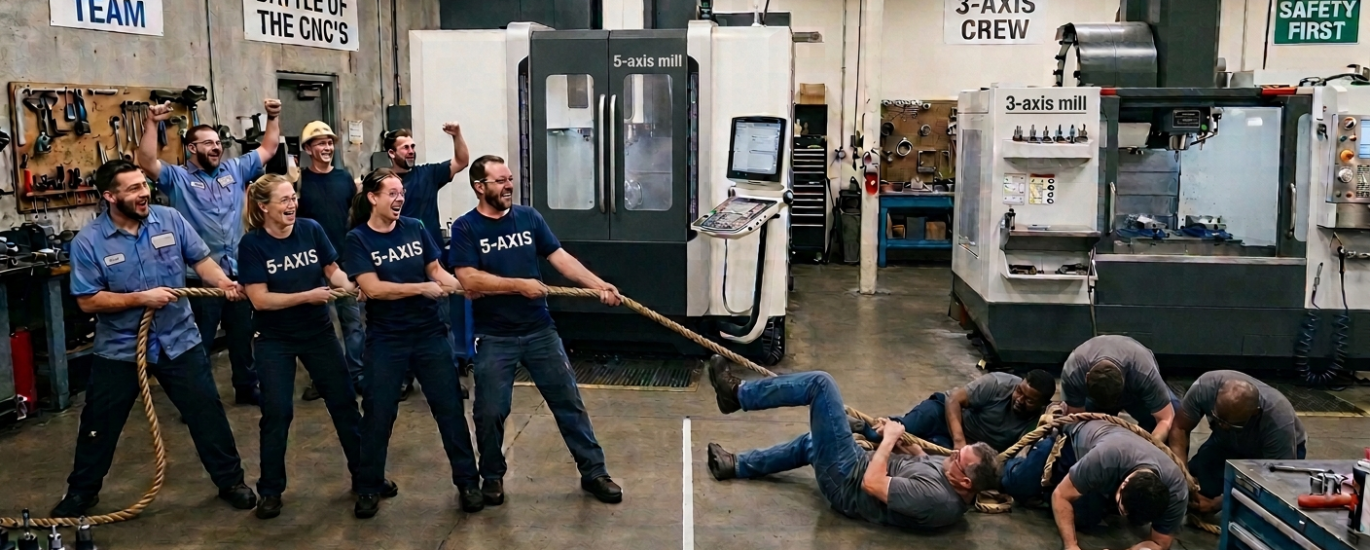
You can’t pay modern expectations when your equipment forces you into outdated economics. Are you losing work to 5‑axis shops — or are you the shop taking work from 3‑axis shops?