We keep talking about the manufacturing workforce crisis like it’s something that’s coming. It’s not coming — it’s already here.
Across the country, shops are watching their most experienced machinists, toolmakers, and programmers retire with no structured plan to replace them. Owners care deeply. The problem is that the system isn’t built to replenish what’s being lost.
Here’s the part we don’t say out loud often enough:
You can’t replace 30 years of experience with a short‑term certificate. A great machinist has many years of intuition, judgment, and the ability to sense when a machine isn’t cutting right. Rebuilding a skilled trade pipeline with quick fixes and job ads doesn’t work.
And yet, that’s exactly where the industry stands.
We have a shrinking workforce, an aging core of experts, and a training model that doesn’t match the complexity of the work. Every sector that depends on precision manufacturing — aerospace, defense, medical, energy, automotive — is feeling the pressure.
This isn’t a shop‑by‑shop issue. It’s a national capacity issue.
In order to keep American manufacturing competitive, we need more than conversations. We need:
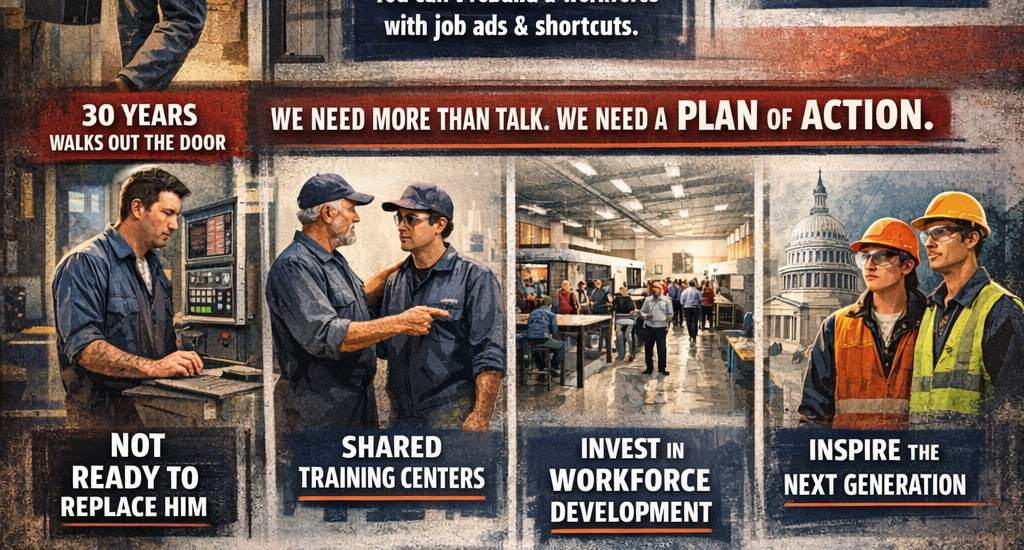
- Real apprenticeship pathways, not short‑term training
- Shared training models that reduce the burden on small shops
- Federal and state investment in long‑term workforce development
- A modern narrative that shows young people the opportunity in this trade
- A plan for knowledge transfer before it walks out the door
The people who built this industry are retiring. The people who will replace them aren’t being trained deeply enough — or fast enough.
I’m going to keep raising this issue until the right people start paying attention.
What will it take for the U.S. to finally treat the skilled trades as a national priority instead of an afterthought?