From Aerospace to Art: Why Precision and Creativity Aren’t Opposites
By Brian Hussey
For most of my career, I worked in the world of aerospace and defense — an environment defined by precision, process control, and responsibility. Every part had to meet exacting specifications, every surface finish mattered, and every tolerance could mean the difference between success and failure. It’s a world where “close enough” doesn’t exist, and quality is the measure of your reputation.
That mindset of precision became second nature to me. I spent years programming CNC machines, designing tooling, and managing complex manufacturing operations where deadlines were tight and expectations even tighter. In those environments, creativity had a place, but it was often hidden behind layers of procedures, inspection steps, and certifications. You didn’t “experiment” on aerospace hardware — you engineered your way to a solution.
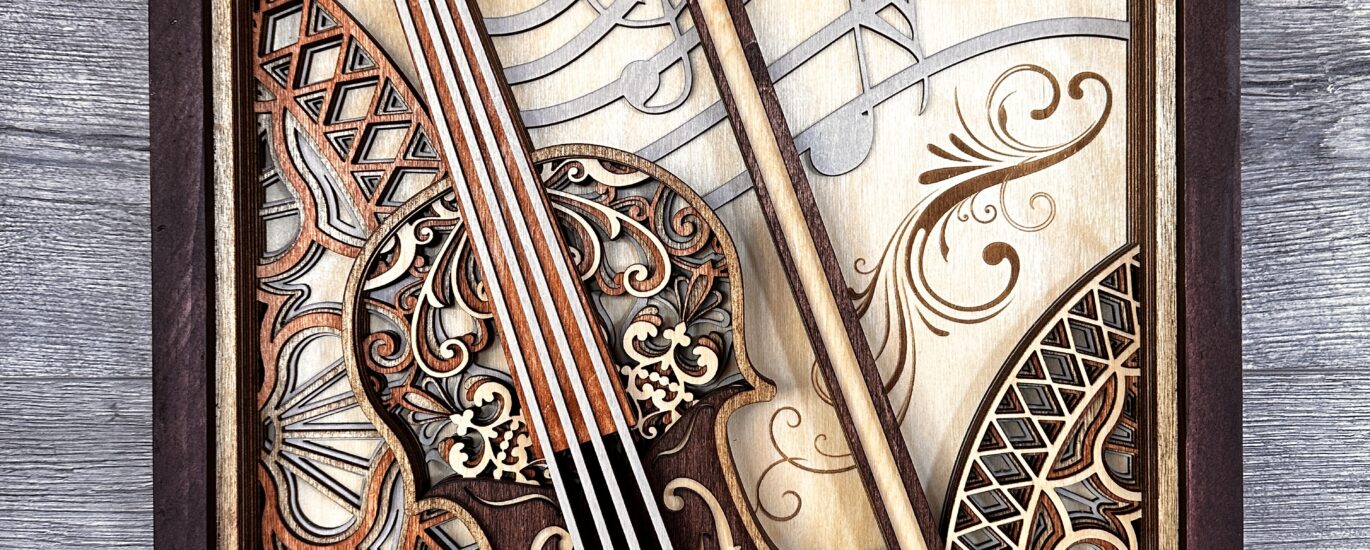
Yet somewhere along the way, I discovered that the same discipline that drives high-performance machining can also fuel creativity. When I began working with wood — first as a way to relax, then as a passion — I found myself using the same approach I’d used on a flight-critical component. Every cut, every alignment, every finish mattered just as much, even if the consequences were aesthetic rather than functional. The tools were different, but the mindset was identical: care about the outcome, control the process, and respect the material.
Woodworking and art may seem like the opposite of aerospace manufacturing, but they share a surprising amount of DNA. Both require patience, planning, and the ability to visualize something before it exists. Both rely on precision — whether it’s holding a +/– .0005” tolerance on an aircraft part or ensuring that a layered wooden flag aligns perfectly when assembled. And in both, craftsmanship is the invisible language that separates a decent result from a remarkable one.
In aerospace, creativity often hides behind technical problem-solving. Designing a fixture to hold an irregular part, writing a toolpath that reduces vibration, or finding a way to cut a complex surface efficiently — these are acts of creativity in engineering form. The same kind of thinking applies in the shop when creating art: how do I layer this material for depth, how will the light hit this surface, how can I use texture to guide the viewer’s eye? Precision is just creativity with constraints.
The transition from machining metal to crafting wood also reminded me of something important — the joy of building with my hands. In defense work, the products I made often disappeared into classified assemblies or faraway systems. In art, I see the finished piece, touch it, and share it directly with others. There’s a sense of connection in that — a reminder that craftsmanship, whether for flight hardware or home décor, exists to serve people in different but equally meaningful ways.
The deeper I go into woodworking, the more I realize how much my aerospace background shapes the way I see art. I think in terms of alignment, surface flow, and geometry. I can’t help but design jigs or fixtures to make repeatable precision cuts. Even in something as organic as wood grain, I see structure and direction. The marriage of art and engineering isn’t a contradiction — it’s a collaboration.
When people see my work, they sometimes assume I’ve left engineering behind. The truth is, I’ve simply changed materials. The same principles — discipline, curiosity, attention to detail — guide both. Machining taught me how to think before acting, to visualize the end result, and to accept nothing less than excellence. Those lessons translate beautifully to creative work.
In the end, precision and creativity are two sides of the same coin. Precision gives creativity form; creativity gives precision purpose. One without the other is incomplete. Whether I’m machining an aerospace component or crafting a wooden flag, the goal is always the same: to make something that’s not only accurate, but meaningful.
After decades of working with metals, machines, and measurements, I’ve come to believe that craftsmanship is universal. Whether the material is titanium or timber, art or engineering, the process is about respect — for the craft, for the tools, and for the vision behind it. From aerospace to art, I’ve learned that true creativity isn’t the absence of precision — it’s the mastery of it.